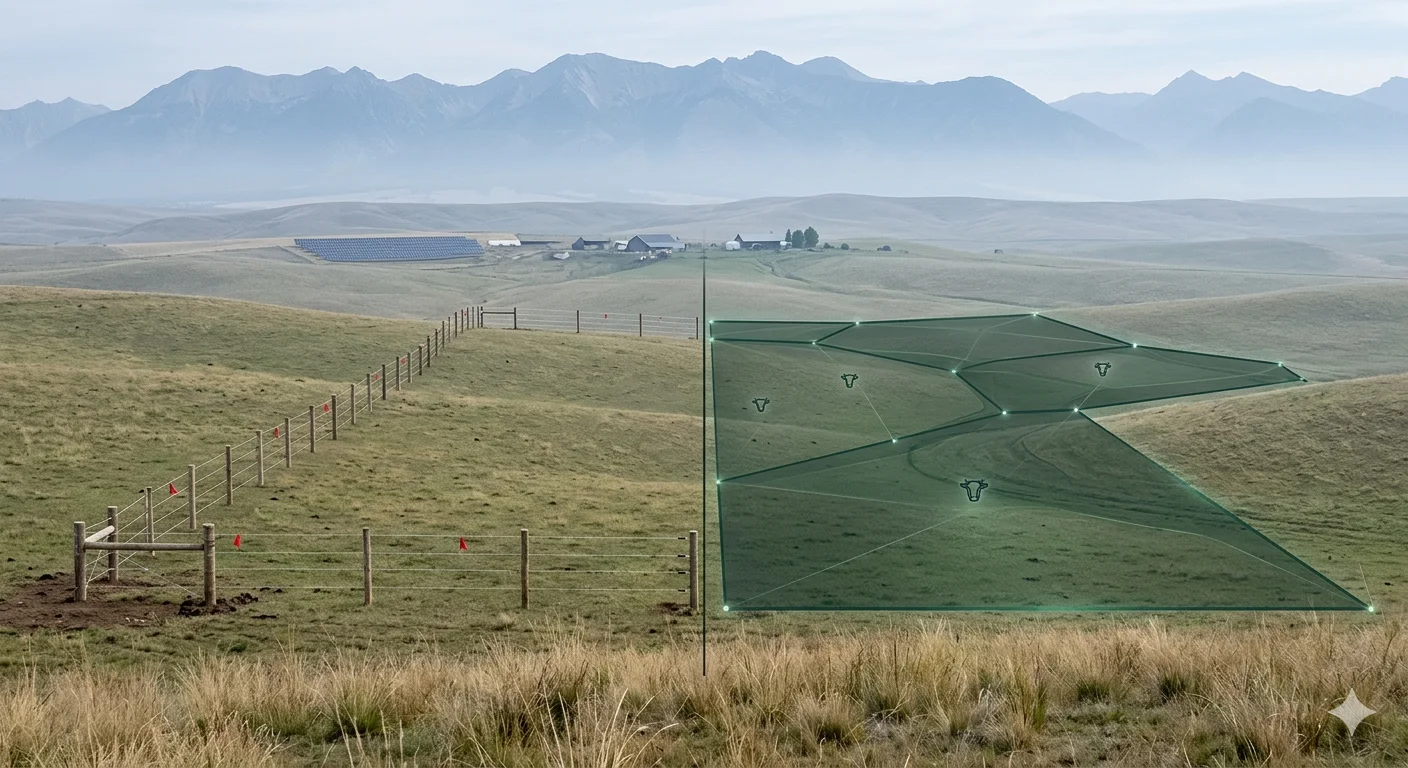
For decades, grazing operations have depended on permanent fencing to manage livestock movement, rotational grazing, and pasture protection. But maintaining thousands of meters of wire across changing terrain has become increasingly expensive, labour-intensive, and difficult to scale — especially for operations already struggling with labour shortages.
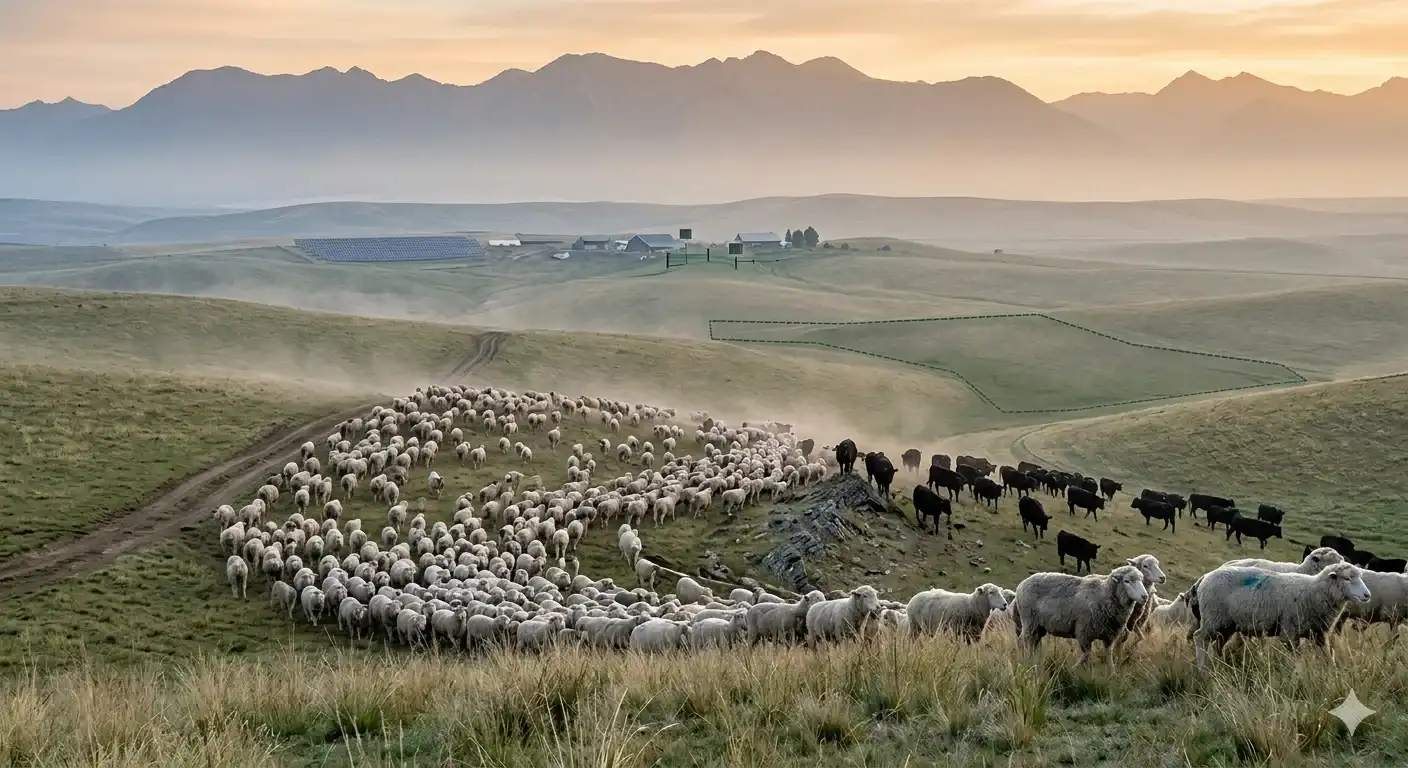
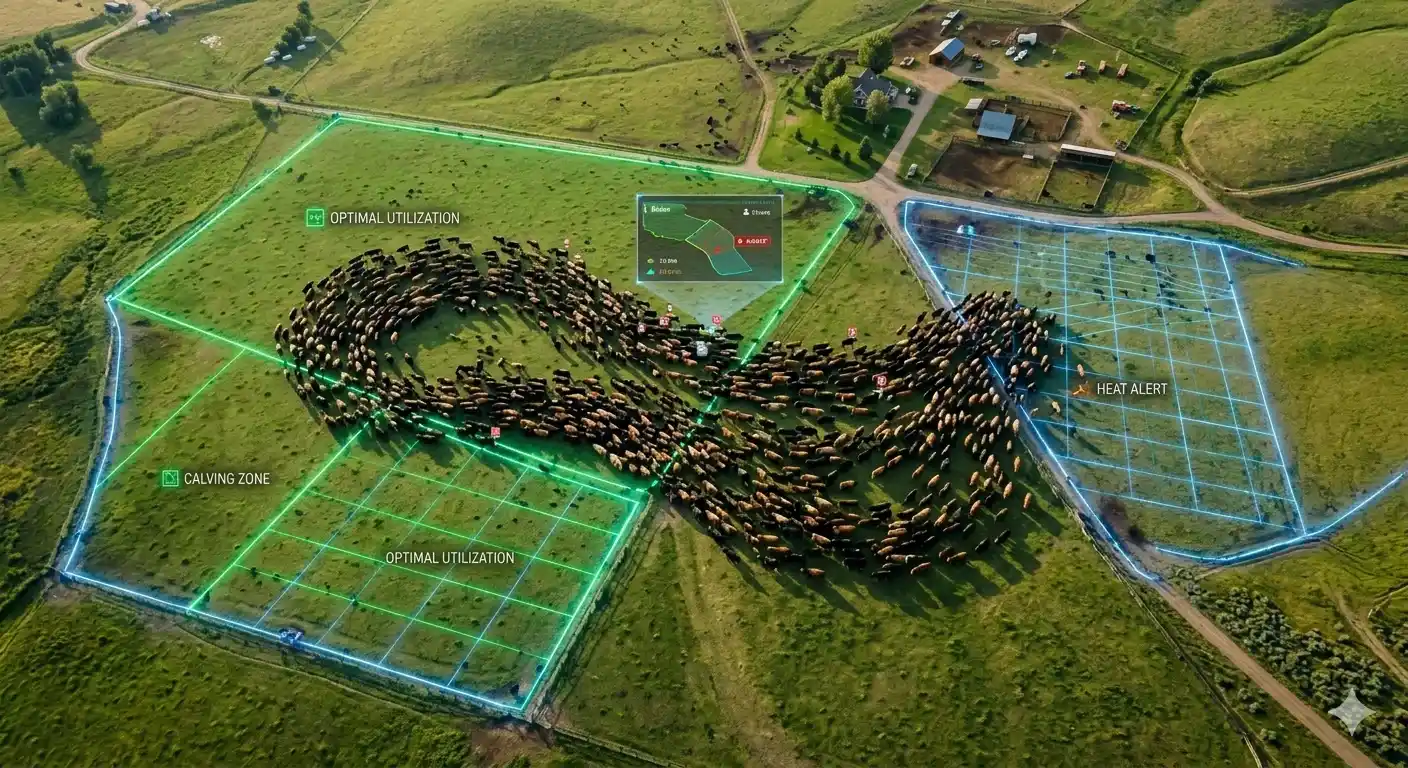
Virtual fencing introduces a different approach. Instead of relying entirely on physical barriers, producers can create digital grazing boundaries that guide livestock movement through GPS-enabled collars and remote management systems. This allows ranchers to adjust paddocks, rotation schedules, and containment zones without rebuilding or physically moving large sections of fence.
The biggest advantage is operational flexibility. Temporary grazing areas can be created in minutes. Rotational systems become easier to manage. Sensitive land areas can be protected dynamically, and producers can respond faster to changing pasture conditions, drought, weather, or grazing pressure.
For large grazing operations, the impact on labour can be significant. Daily fence-moving tasks are reduced, rotational grazing becomes easier to maintain consistently, and teams spend less time physically managing infrastructure across large properties.
Virtual fencing is not replacing good grazing management — it is making modern grazing systems more adaptable, scalable, and sustainable in an environment where operational pressure continues to increase year after year.