There are good companies in this category. Here's what makes us a different one.
You’re not here to be convinced virtual fencing works. You’re here to decide whose version of it to bet your operation on. We’ve laid out the case plainly — what we do, what others do, and the specific differences that should matter to the decision.
✦ ENGINEERING THE PRODUCT
Four satellite constellations. 1.5-metre accuracy. Tested before shipped.
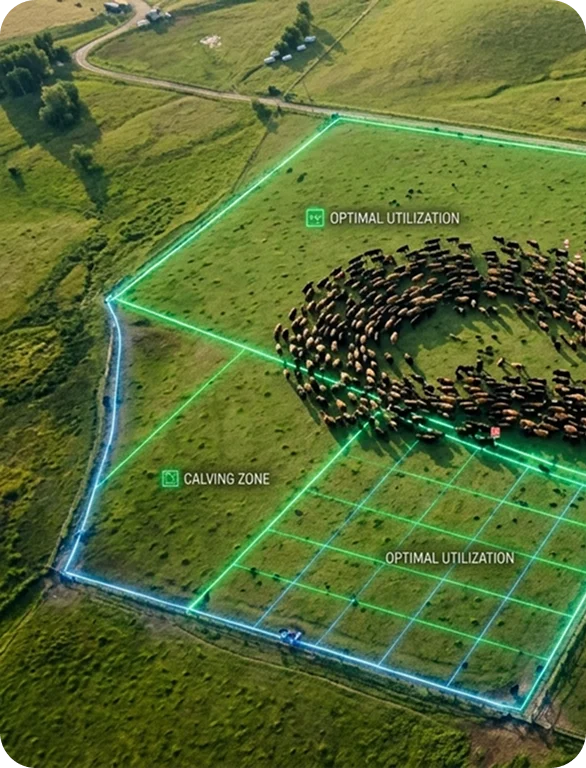
Most virtual fencing systems use one or two satellite constellations and achieve practical boundary accuracy of four to six metres. We use four — GPS, GLONASS, Galileo and BeiDou simultaneously — and combine them with on-collar inertial sensing. Practical accuracy: 1.5 metres in open country, holding that figure through hill cover, weather, and tree canopy that takes other systems offline.
The reason is straightforward. Single-constellation systems were sufficient when virtual fencing was an experiment. They’re insufficient when an operator depends on the boundary against a 1,200-pound animal next to a public road. We engineered for the production use case from the start — which is why our boundary accuracy is roughly 3× better than the category standard.
✦ ENGINEERING THE PRODUCT
Dual-mode radio. Standard, not optional.
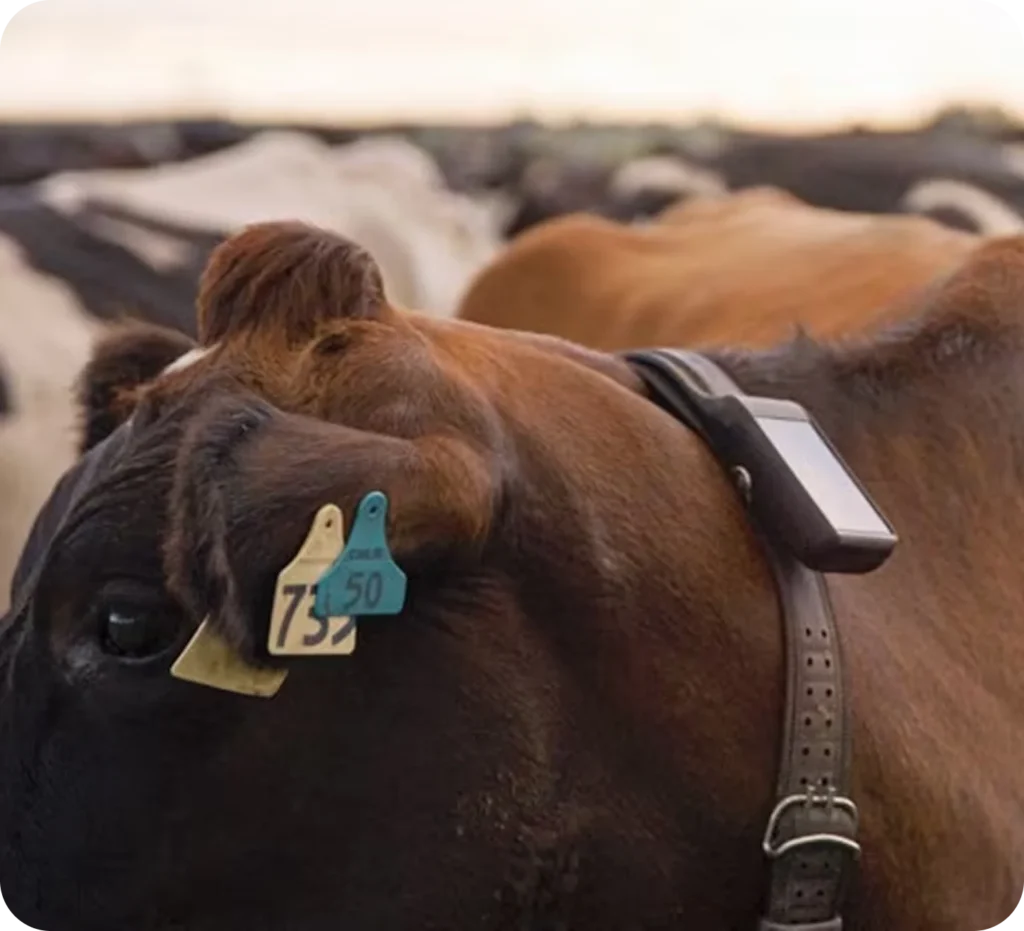
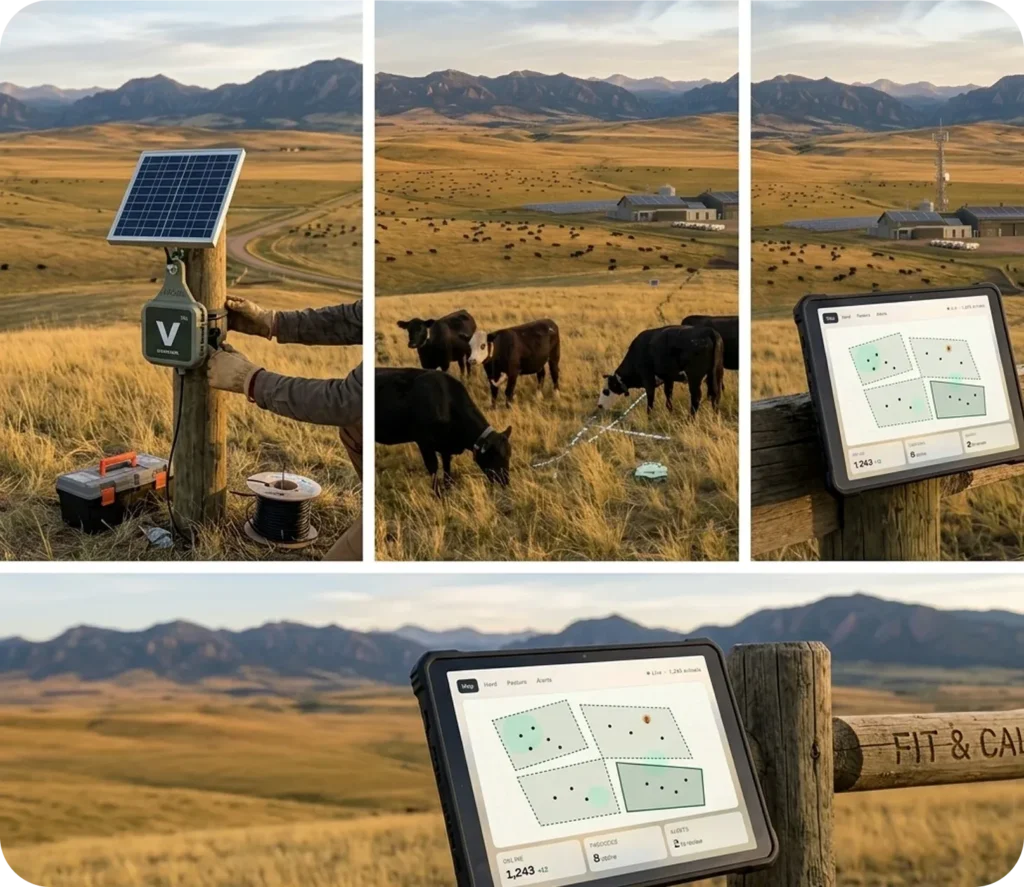
This is the largest hardware difference between our system and most competitors. Every VirtualFence collar carries two independent radios — LTE for cellular networks, direct-to-satellite for everywhere else — and switches between them automatically. Most competitors offer satellite connectivity as an optional add-on or don’t offer it at all, which means their fence is only as reliable as the cellular network in your specific paddock.
We made the decision early to absorb the satellite radio cost into the standard hardware rather than upsell it. Two reasons: first, satelliteis the difference between a working fence and a failed one in remote country. Second, requiring operators to evaluate their cellular coverage before deciding which version to buy is exactly the kind of friction that loses customers. Buy the collar. The connectivity is
included.
✦ ENGINEERING THE PRODUCT
You own the hardware. We don't lease it back to you.
This is the difference that surprises operators most. Some competitors in this category operate on a lease-only model — you never own the collar, you pay monthly forever, and if you stop paying, your fence stops working. Others charge per-animal subscription fees on top of hardware purchase, so every collar generates ongoing revenue.
We chose a different model. You buy the collar — outright or financed — and platform access is included for the working life of the hardware. No monthly fees, no per-animal SaaS pricing, no risk
that a vendor pricing change three years from now leaves you with depreciating hardware and rising bills. Our total cost of ownership is meaningfully lower over five years than every lease-based competitor we’ve benchmarked.
SaaS-first model
Revenue forever. Pressure forever.
Y1
Y2
Y3
Y4
Y5
Locked-in · churn-sensitive ·
feature-pressure
Hardware-first model
One sale. Ongoing trust.
Y1
Y1
Y1
Y1
Y1
Aligned with operator outcome
✦ ENGINEERING THE PRODUCT
Hardware company first, software company second.
Most virtual fencing competitors are structured as software companies that happen to sell hardware. Their financial models depend on recurring revenue, which is why their pricing leans toward leases and subscriptions and why their roadmaps are dominated by SaaS features.
We’re structured differently. The hardware is the primary product, the platform is the included service, and our financial model assumes you buy once and stay because the system keeps working — not because you’re locked into a contract. That structural choice has knock-on effects: we spend more on hardware engineering than the category average, less on growth marketing, and we accept slower revenue growth in exchange for lower customer churn. We’re not under pressure to add features that generate subscription revenue. If a feature doesn’t help operators, we don’t ship it.
Tell us about your operation. We'll show you the rest.
A 30-minute call with someone who has actually walked a farm. No slide deck — we’ll open the platform on your block.